
Short answer. Plan at least two nights in Shangri-La, one or two nights in Deqin facing Meili Snow Mountain, and one more night back in Shangri-La before you fly. Allow four hours or more for each drive between them. The second Deqin night is not for a second viewpoint; it buys a second sunrise in case the first is clouded out.
What we drove
2 + 2 + 1 nights
- Shangri-La: 2 nights
- Deqin: 2 nights
- Back to Shangri-La: 1 night
Inside a 10-day Yunnan trip
3 + 1 + 1 nights
- Shangri-La: 3 nights
- Deqin: 1 night
- Back to Shangri-La: 1 night
Inside an 11-day Yunnan trip
3 + 2 + 1 nights
- Shangri-La: 3 nights
- Deqin: 2 nights
- Back to Shangri-La: 1 night
Begin with Shangri-La, not a packed first day
Shangri-La city and Dukezong Old Town sit at roughly 3,300 metres. We began with two nights at Hotel Indigo Diqing Moonlight City rather than moving on immediately. Our room had an in-room oxygen system, and we did not feel noticeable altitude discomfort.
That is our own experience, not a promise for anyone else. Oxygen equipment does not replace a gradual ascent or personal medical advice. The useful lesson for planning: keep the first evening light, and do not treat the arrival day as spare sightseeing time.
March changes what deserves priority
In March, the meadows had not yet turned the saturated green of summer photographs. The air was clear, the distant snow mountains were sharp, and the landscape felt open and spare.
We walked Dukezong Old Town, climbed to the hill above the roofs and turned the giant prayer wheel. Napa Lake gave a different scale: wide water, grassland and mountains with almost no visual clutter. Songzanlin Monastery deserves real time if Tibetan Buddhist culture interests you; for landscape-first travelers a shorter visit works. We skipped Wudi Lake because of the extra road time, so we do not recommend it from experience.
Treat the G214 as part of the journey
From Shangri-La toward Deqin we followed the paved G214 mountain road. We drove through snowfall, and the road stayed passable on that day; on the sunny return the mountain views lasted most of the way.
One good drive is not a safety claim. Snow and ice affect the high passes, and heavy rain can bring rockfall or closures. We now plan at least four hours for this transfer, then add time for weather, stops and current road conditions, and we use a driver who knows the road.
Wunongding or Feilai Temple?
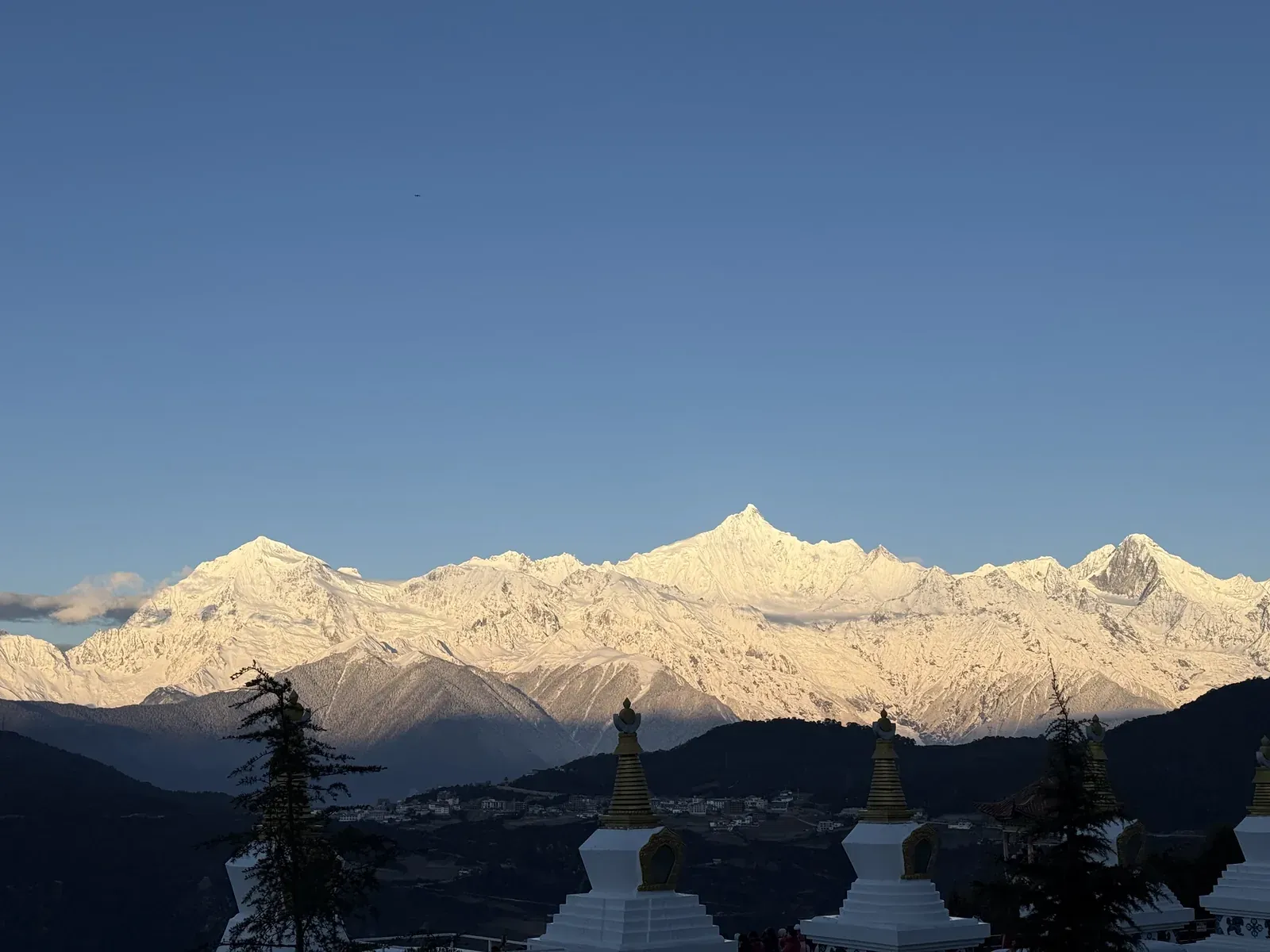
We stayed two nights at Jianglu Wunongding, facing the Meili range. On a clear morning, light reached the peaks one by one until the whole range glowed.
Wunongding
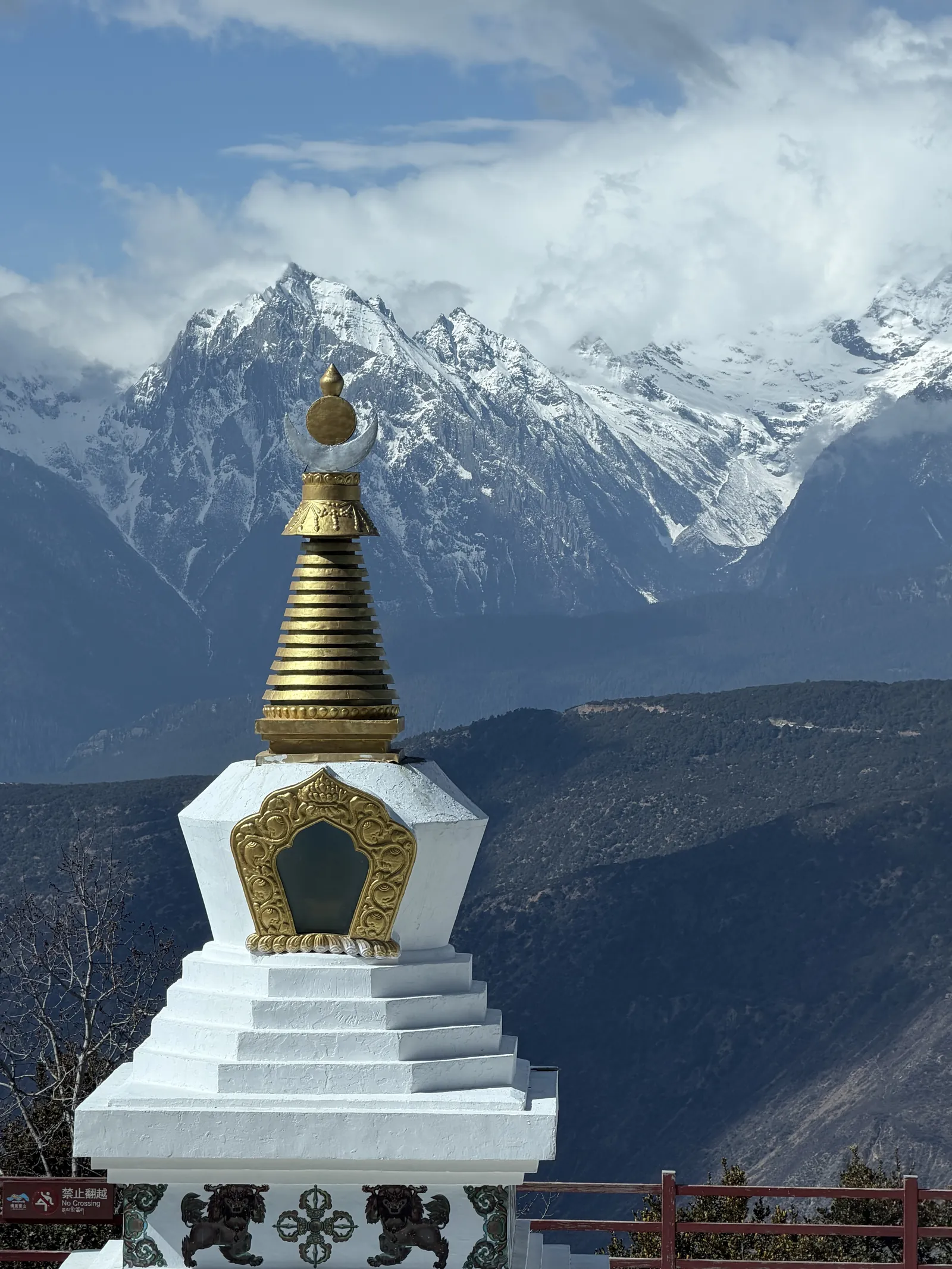
The wider panorama: a layered view of the whole range, with white stupas and the valley in front. Choose it when the full composition matters.
Feilai Temple
The closer impression: a more frontal view toward Kawagarbo, the highest peak, which fills more of the frame.
The two viewpoints are a short drive apart, so they do not need separate days. The real reason for a second Deqin night is weather: one night gives you one sunrise, two nights give you two.
Return to Shangri-La before the flight
In clear weather, our drive back from Wunongding took about three hours. That was our trip, not a schedule. A working plan should allow at least four hours, more in winter or the rainy season.
Shangri-La has its own airport, so a same-day drive-and-fly is sometimes possible. We still stayed one more night. It removed the pressure of matching a mountain road to a departure time, and made the last day resilient if conditions changed.
The planning principle
The calmest Shangri-La and Deqin route is not the one with the most pins. It protects the first day at altitude, treats the road as real travel time, gives Meili a fair weather window, and keeps the last mountain drive away from the flight.